
Infertility and Its Emotional Challenges
When the Journey Becomes Mentally and Relationally Draining
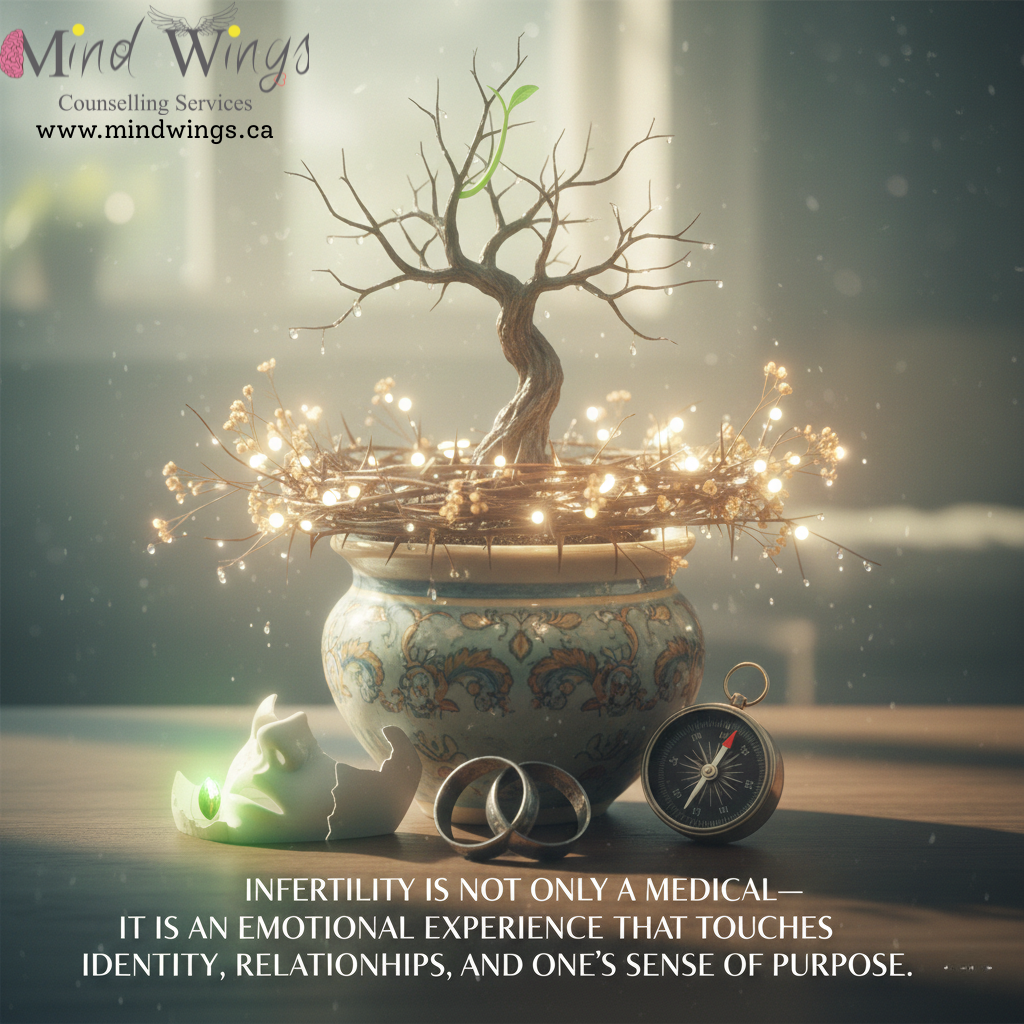
Infertility is not only a medical condition, it is an emotional experience that
touches identity, relationships, and one’s sense of purpose. Many people
begin this journey with hope, determination, and faith that things will
eventually fall into place. What is rarely spoken about is the emotional weight
carried along the way: the waiting, the uncertainty, the financial strain, the
private disappointments, and the quiet heartbreak that can settle into
everyday life. Over time, this emotional burden can feel exhausting, leaving
individuals and couples feeling disconnected, depleted, and unsure of who
they are becoming through it all.
So many clients describe infertility as a silent grief; grieving the life they
imagined, the timeline they expected, and the natural ease they believed
would come with building a family. Feelings of sadness, anxiety, anger, guilt,
and even shame often surface. Some begin to question their worth or identity:
Why my body? Why us? Sleep becomes restless, concentration fades, and
joy may feel distant. Social situations, baby showers, family gatherings,
casual conversations can suddenly feel painful and isolating. Even well-
intended words like “just stay positive” may deepen the sense of loneliness
when what you truly need is understanding.
The emotional toll of infertility can quietly accumulate. The repeated cycles of
hope and disappointment may create emotional fatigue that feels heavy in the
heart and the body. Many begin to feel disconnected from themselves, from
their dreams, and from the parts of life that once brought meaning. Yet within
this struggle, one truth remains:
your pain is real, and your experience matters. You are not weak for feeling this way. You are human!
Infertility does not only affect individuals; it touches the emotional foundation
of relationships as well. Even in strong partnerships, the ongoing stress, grief,
and uncertainty can reshape how couples connect.
Emotional Distance:
Partners often cope differently; one may need to talk, while the other becomes
quiet. Without realizing it, both can start to feel alone in the same relationship.
Communication Strain:
Conversations may revolve around appointments, plans, or decisions, while
deeper emotions remain unspoken. Many couples protect each other by
hiding fear or sadness, yet this silence can slowly widen emotional gaps.
Changes in Intimacy:
When closeness becomes tied to pressure and expectation, intimacy can feel
mechanical rather than loving. This can bring feelings of rejection, grief, or
emotional disconnection for both partners.
Guilt and Self-Blame:
Some internalize responsibility, while others feel helpless or frustrated. These
unspoken emotions can quietly turn into self-doubt or distance if not gently
addressed.
Financial and Life Stress:
Ongoing decisions about time, money, and emotional investment can weigh
heavily on relationships, sometimes creating tension even between deeply
caring partners.
“Yet it is important to remember: relationship strain during infertility
does not mean your bond is broken. It means your relationship is
carrying something incredibly heavy”
From a psychotherapeutic lens, healing does not begin with “staying positive.”
It begins with allowing space for grief, confusion, and emotional exhaustion,
without judgment. Therapy offers a place where your pain does not need to be
minimized or explained. It is a space where your story is held with
compassion.
In therapy, individuals rediscover self-worth beyond outcomes. Couples learn
to reconnect through empathy, vulnerability, and emotional safety rather than
through problem-solving alone. Trauma-informed approaches acknowledge
the cumulative emotional toll, while mindfulness and emotional regulation
tools help restore balance during periods of waiting and uncertainty.
Most importantly, therapy reminds you of something essential:
“You are not alone in this experience, even when it feels isolating. Your
struggle is shared by many, even if it is often hidden behind quiet smiles
and unspoken stories”
Infertility can make happiness feel distant, as if life is on hold until something
changes. But happiness is not only found in outcomes; it is also found in
moments of connection, meaning, compassion, and self-acceptance along the
way. Healing does not mean forgetting your dream; it means learning how to
live fully, gently, and authentically while carrying it.
If you are feeling emotionally drained, disconnected from your partner, or lost
in uncertainty, please know this:
“You are not broken. You are not failing. You are not alone”.
Your life still holds meaning. Your relationships still deserve care. Your heart
still deserves peace. You do not have to walk this path in silence. Support,
understanding, and healing are available. And step by step, with compassion
for yourself and your story, you can rediscover hope.
Please connect with Mind Wings Counselling Services in your emotionally
healing journey at www.mindwings.ca



Mindwings. All Rights Reserved.